When a bird is trapped... |
who comes? |
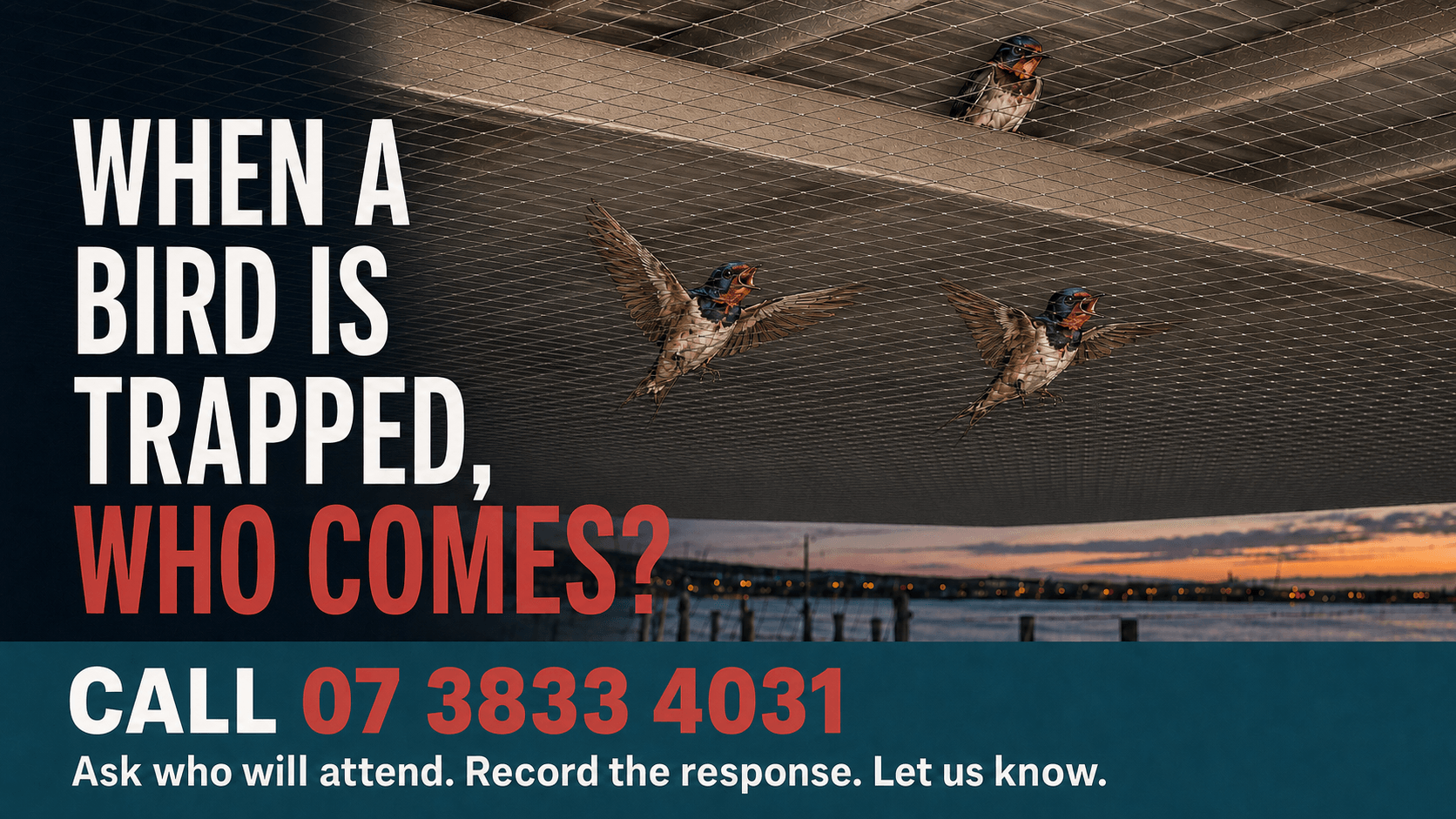
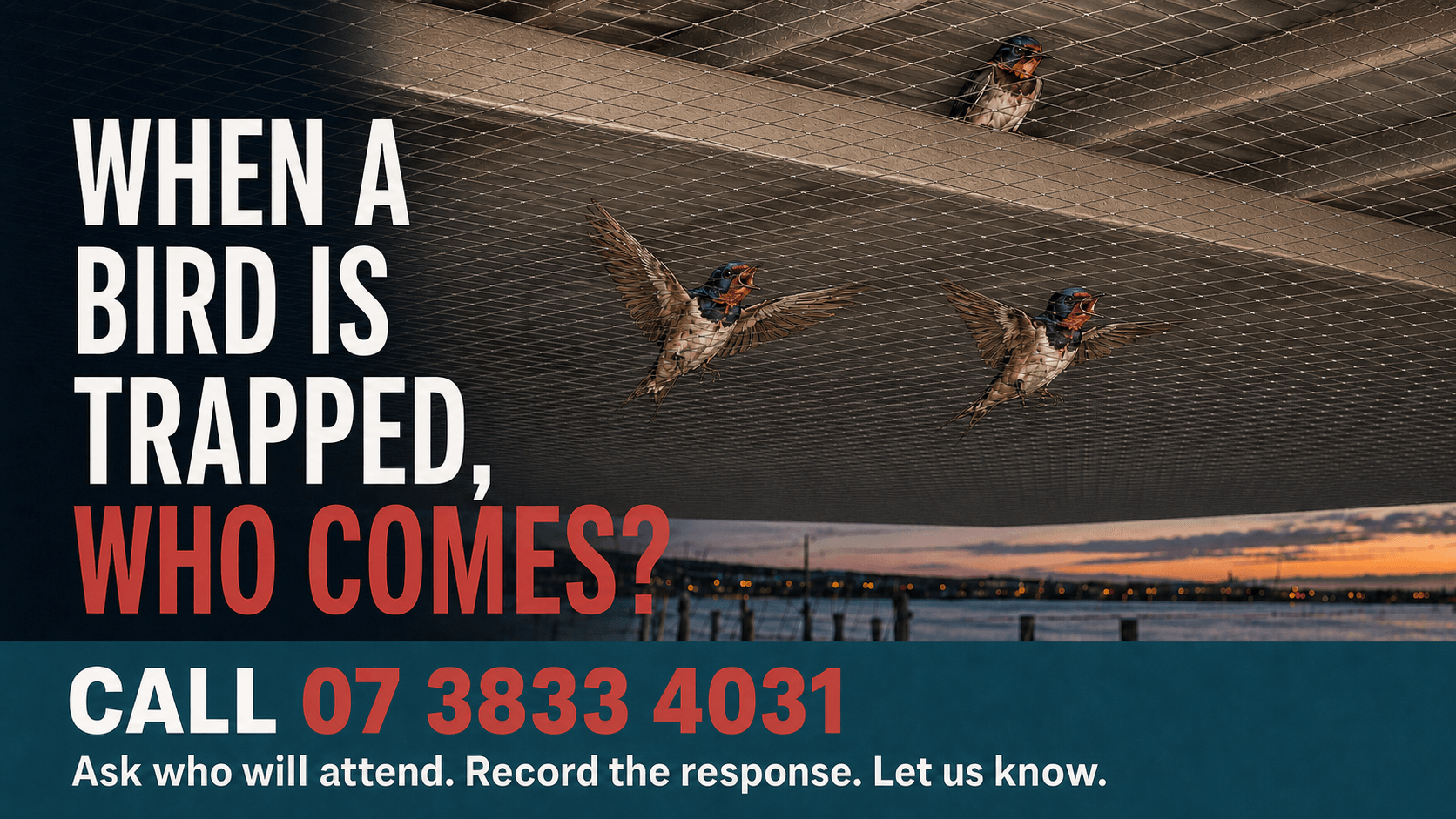
8 minute read (grab a coffee or wine) There is something deeply distressing about watching a tiny bird struggle for its life while standing beneath a public structure, surrounded by people, phones and government departments, yet having no clear idea who is coming to help.
That is now the reality facing Welcome Swallows at the Coochiemudlo Island and Victoria Point ferry pontoons.
The birds that once slept in rows beneath the sheltered jetty roofs have been excluded by netting installed on behalf of Redland City Council.
Since then, residents have witnessed swallows trying to return to the places where they have roosted, and reportedly nested, for generations. Some have found their way behind the netting. Then they could not find their way out.
At least one Welcome Swallow has been photographed dead after becoming entrapped.
Others have been seen alive behind the netting, distressed and unable to reach food or water. The tragedy is not only that birds are being trapped. It is that, when it happens, nobody seems entirely sure who is responsible for getting them out.
A phone call that went nowhere One resident who saw trapped birds contacted Redland City Council looking for help. According to him, the customer service staff did not know where to direct the report. He was placed on hold while they tried to work it out and, after waiting for so long, eventually gave up and hung up.
That should concern every one of us.
A small bird trapped in netting cannot wait while responsibility is shuffled between Council departments, contractors, animal welfare organisations and wildlife authorities. It needs somebody trained and authorised to attend. Quickly.
The RSPCA has now been contacted about the situation, although it remains unclear what role it may take in rescuing birds trapped within this particular structure.
Meanwhile, no publicly available emergency procedure has been identified for the jetty netting itself. We do not know who inspects it, how frequently it is inspected, who is authorised to release a trapped bird, or what response time applies once an entrapment is reported.
And that unanswered question is becoming increasingly urgent.
The birds are coming home Welcome Swallows do not see the jetty as a Council asset, a maintenance problem or a line in a multimillion-dollar contract.
They know it as home.
For more than 50 years, according to long-term residents, generations of swallows have sheltered beneath the ferry pontoons.
Evening commuters knew the sight well: tiny feathered bodies tucked together above the water, protected from wind, rain and the worst of the heat.
Then the netting went up. The birds were suddenly forced onto exposed pontoons, railings and nearby boats. Others continued trying to enter the sheltered spaces they remembered.
That behaviour will not simply stop because somebody installed a barrier.
Welcome Swallows breed from approximately August to February, often building their mud-cup nests on bridges and other human-made structures. They may also return to previously used nesting locations.
The approaching breeding season means the birds are likely to become even more determined to reach their former nesting spaces. ([Australian Museum], [Birds in Backyards]
The netting may deny them entry. Worse, any gap, tear or poorly secured section may allow a bird to get behind it without providing an obvious route back out.
We already know that can happen because it has happened.
Protected wildlife, unresolved legal questions Welcome Swallows are protected native wildlife in Queensland.
This does not mean every inconvenience or disturbance automatically amounts to a criminal offence. It does mean that decisions affecting the birds, particularly once nesting begins, must be approached with considerably more care than appears to have been shown here.
Section 335 of Queensland’s Nature Conservation (Animals) Regulation 2020 prohibits removing or tampering with a breeding place being used by a protected animal to incubate or rear its young, unless there is a reasonable excuse. The maximum penalty is 165 penalty units. ([Queensland legislation]
The Animal Care and Protection Act 2001 also applies to animals living in the wild. Section 18 prohibits cruelty, including causing unjustifiable or unreasonable pain, terrifying or worrying an animal, or confining it inappropriately.
Section 17 creates a duty of care where a person is legally considered to be “in charge” of an animal. Whether that duty is triggered by maintaining a structure that repeatedly traps wildlife is a matter for the relevant authorities to determine. [Queensland legislation]
Nobody outside the investigative and judicial process should declare Council or its contractor guilty of an offence. But the photographed death of at least one protected bird, reports of further entrapments, the lack of a known inspection and release procedure, and the imminent nesting season raise serious questions about possible breaches of Queensland’s wildlife and animal-welfare laws.
Those questions cannot be answered by saying the contractor was instructed to comply with the law. Compliance is measured by what happened on the ground, not by what was written in an instruction.
“We were advised no birds were present” Council has said it was advised that no birds were nesting or roosting in the affected areas when the netting was installed and that no birds were disturbed during the work.
That statement is difficult for many residents to reconcile with what they know of the site. These birds were regularly observed roosting at the pontoons at night. That was not a secret. It was an ordinary part of travelling between the island and the mainland after dark.
Lulu from 'Behind the Redlands' has summed it up beautifully.
Council has also said the netting was installed by a qualified contractor as an asset-protection measure. The contractor has been identified as Blast Pest Management, a company that openly advertises bird-management services, including netting intended to stop smaller birds such as swallows from nesting.
The central question is no longer whether the netting was intended to exclude birds. Clearly, it was.
The question is whether Redland City Council and its contractor adequately assessed what would happen to a long-established population of protected birds afterwards, including the foreseeable risk of entrapment.
❓Where is the wildlife assessment?
❓Where is the monitoring schedule?
❓Where is the rescue protocol?
❓Who answers the phone when a bird is struggling behind the net?
So far, the community has not been given clear answers.
I’m surprised more of the community hasn’t acted already!
Seeing an animal in distress creates an almost irresistible urge to act. That is completely understandable.
While I refuse to give up on these gorgeous little protected creatures, increasing numbers of people are taking photos and videos and letting me know they have reported their concerns through the appropriate channels. I would love to better understand the number of people willing to put their hands up and help, or who have already done so.
For now, we’ve moved from “make a complaint to Council”, although please continue to do that, to getting immediate help for birds that become entrapped.
If you see a bird trapped or injured:
If you are transferred or placed on hold by Council’s general customer service line, call the dedicated wildlife rescue number above. A trapped bird does not have time for a departmental mystery tour.
We should not have to wait for another bird to die!
This issue is already being raised with Redland City Council, RSPCA Queensland, DETSI and BirdLife Southern Queensland.
A state environmental complaint is under investigation, and concerns have been formally put to Council about the dead bird, further entrapments, displaced swallows and netting debris entering the marine environment.
What we still do not have is the simplest and most important assurance:
That when the next Welcome Swallow becomes trapped, somebody will come.
Before nesting season begins, Council should urgently publish:
This is not anti-Council hysteria. It is not an attack on Council staff, and for me it has become bigger than simply bird poop on a pontoon!
It is a reasonable request for accountability after a protected bird has already died.
The Welcome Swallows cannot lodge a complaint, request a reference number or sit on hold.
That part is up to us.
If you see a bird trapped at either jetty, please make the rescue call, document what you observe and let us know what response you receive.
One clear, properly recorded report may be the difference between another photograph of a dead bird and a tiny set of wings returning safely to the sky.
Text me on 0408792762 if you'd like to join a special email list that is sharing what we are doing. |
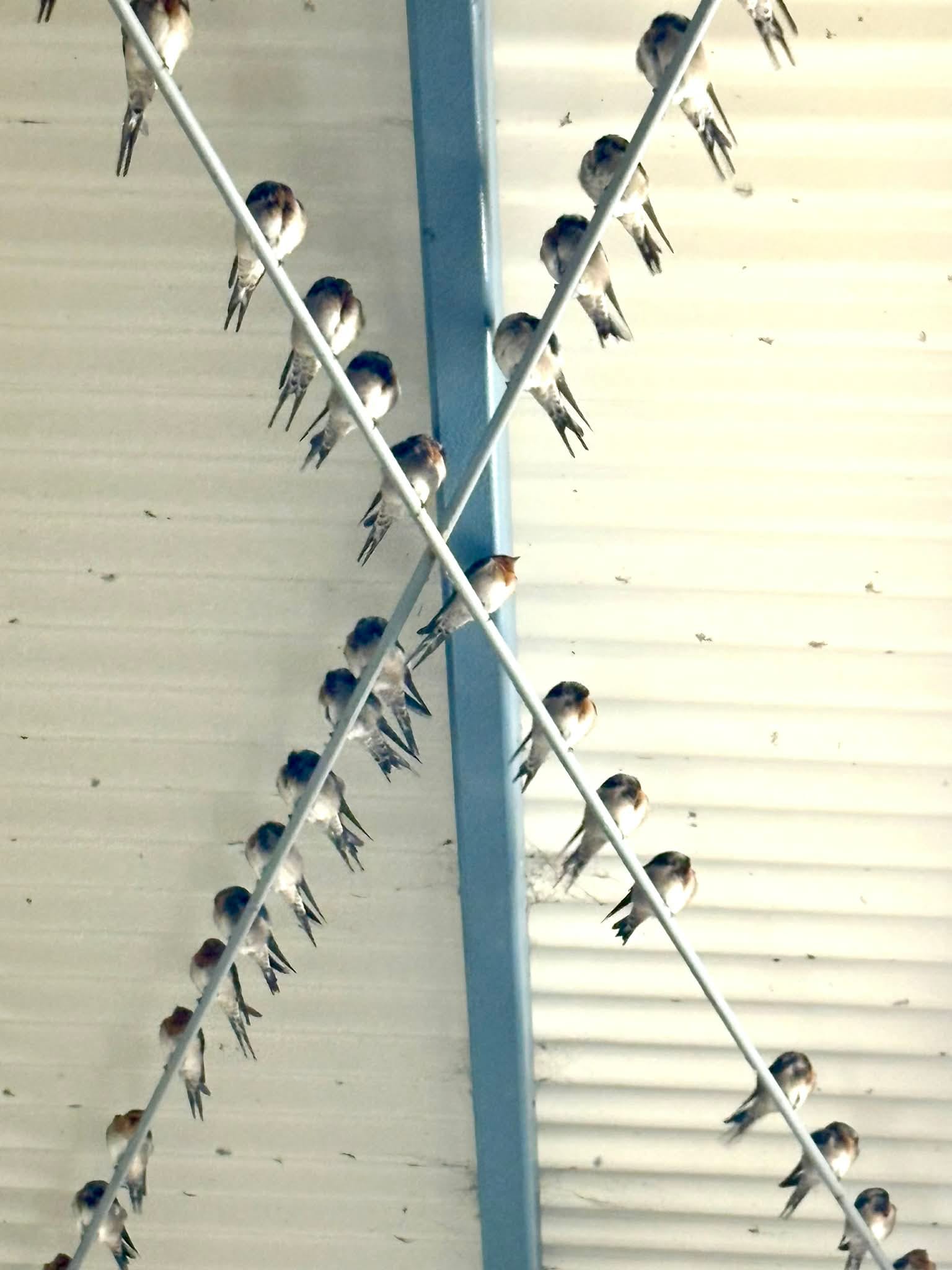 |
Image supplied by a concerned human. Permission given to include. |
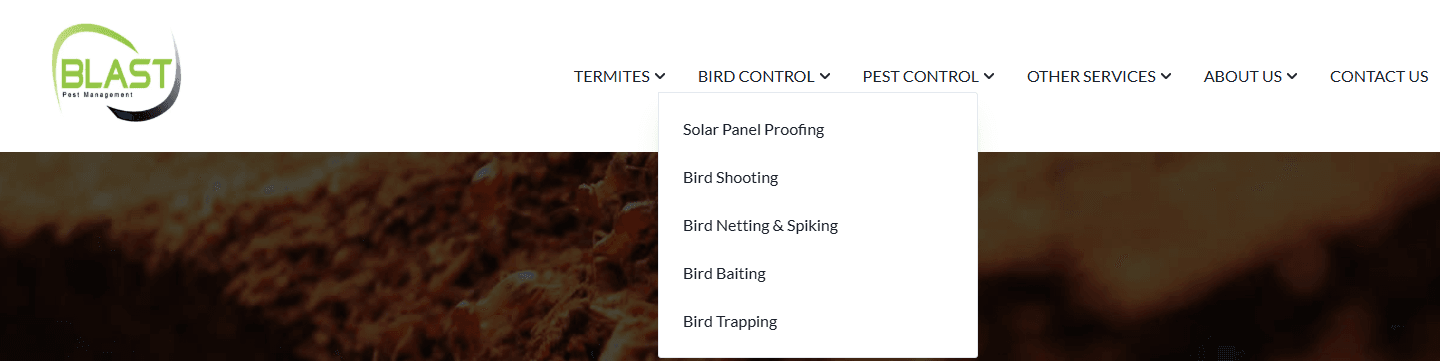 |
While we haven't got any satisfactory responses to earlier questions from Redland City Council, the Blast Pest Management website clearly shows their business is not in protection Wildlife. |
10 Comments
Join the conversation
I was walking off the jetty a couple of weeks ago, and noticed 2 women in uniform ahead with a long handled tool discussing the birds, the netting in the fishing shed at the end of the jetty where they had been. I asked them if they were checking for trapped birds to rescue. and their reply was "we'd like to but that's not our job". When I returned with my own multi purpose tool I keep in my car, I checked the shed and saw a hole cut in the netting. So I think a bird/s had been trapped, the women had left it to die, someone, a fishing person perhaps, released it by cutting a hole in the netting. I dont think we can rely on maintenance staff to rescue the birds. They come to repair the netting.
MareeWow, that's crazy, Maree! Please remember to take pics/videos (if it's safe to do so) of these events. We really do need to have some decisions made and actions taken on how council is planning on dealing with the displaced birds, especially now, during nesting season. They are getting more and more distressed trying to find their way back to their old nesting places. It's heart breaking.
Who's actually in charge of the rescue? I tried calling council once for a curlew and got nowhere.
I get it’s for maintenance, but there has to be a safer way. Maybe regular checks?
Ben S.That's what we're trying to establish with council. No-one is talking to us though....
I remember watching those birds on the jetty as a kid. Feels wrong to block them out like this.
Why did they put up netting with no plan for trapped birds? Not ok.
Steve R.Please write to council and ask them to have a plan. It's not cool to do this. https://www.redland.qld.gov.au/About-Council/Contact-Us
Heartbreaking to see this happening. Poor little swallows! Council needs to do better.
Emily P.Yes, please feel free to let them know, too!! https://www.redland.qld.gov.au/About-Council/Contact-Us