🌺 Pigface (Carpobrotus glaucescens) |
Unlock the ancient healing secrets of Pigface, the miracle plant of the outback! |
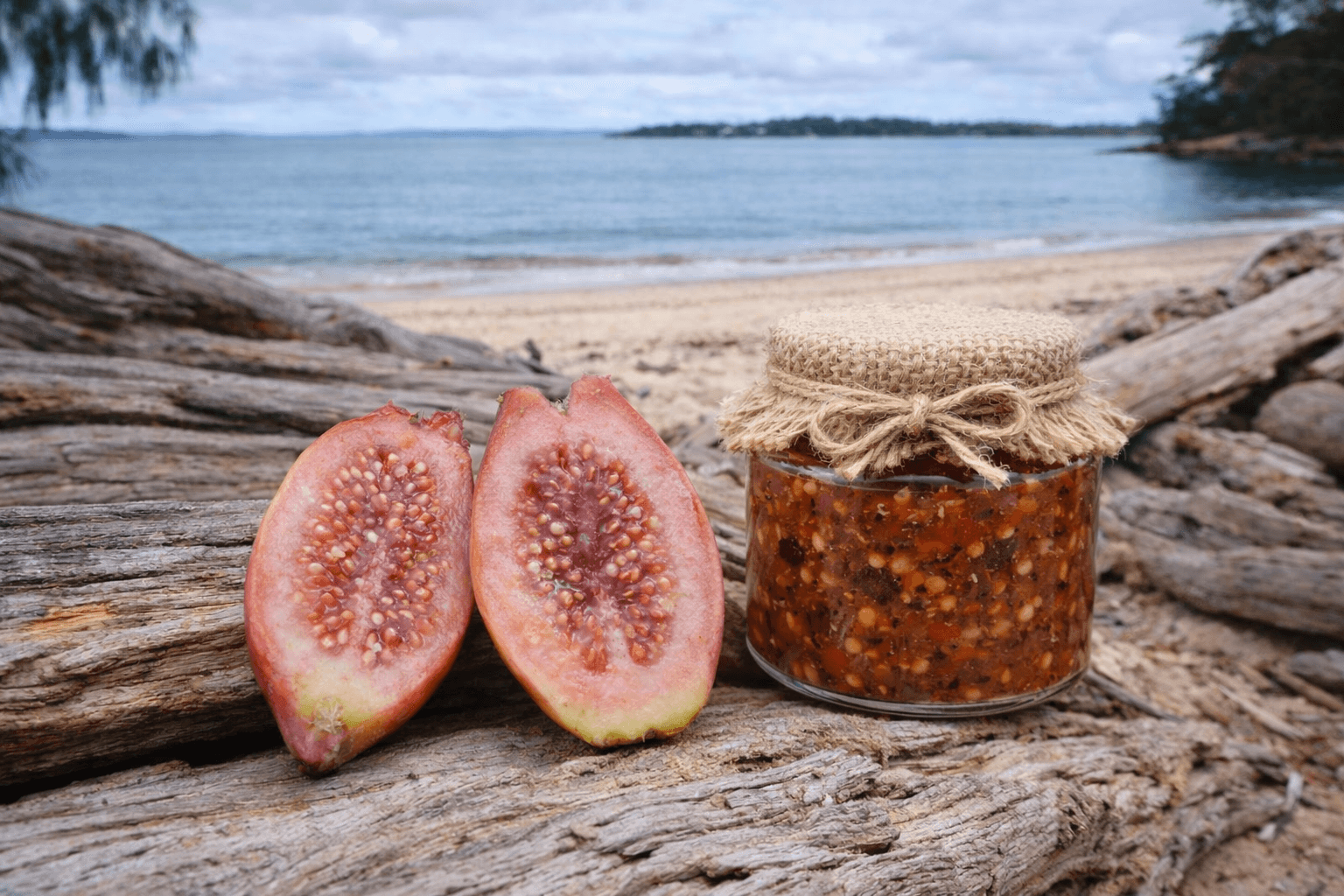
Note: Image generated by AI, and I think it may be hallucinating a fig, or has ingested some not-so-nice bush tucker! 🤣 What do you think? 🤔 |
If you’ve walked along Coochie’s foreshore lately, you’ve seen it.
It kind of does.
Pigface is one of our quiet coastal heroes. It creeps low across dunes, sending out thick succulent leaves that trap sand, reduce erosion and help stabilise fragile shorelines. While we’re admiring the view, Pigface is literally holding the island together.
And yes, you can eat it.
What is Pigface?Carpobrotus glaucescens is a native succulent found along Australia’s eastern coastline. It thrives in salty air, blazing sun and poor sandy soil. Conditions that make most plants throw in the towel.
It spreads outward rather than upward, forming mats of fleshy triangular leaves and large daisy-like flowers in vibrant pink-purple tones.
After flowering, the plant produces a fleshy fruit that ripens through summer into early autumn.
What does it taste like?
The ripe fruit is mildly sweet with a slightly salty edge. Think subtle, not supermarket-fruit intense.
Inside, the texture is soft and seedy. Some people love it fresh. Others prefer using it in: • Chutneys
The leaves are also edible in small amounts and have a crisp, salty tang. They’ve traditionally been used both as food and for soothing skin irritations.
Traditional Use
Pigface has long been used by First Nations people along coastal Australia. The fruit was eaten fresh, and the leaf juice was applied to minor cuts, insect bites and sunburn.
It’s one of those plants that feeds and heals. Practical. No fuss.
When is it in season on Coochie?
🌸 Flowers: Spring through summer Right now, you may still spot fruit lingering from summer flowering, depending on rainfall and heat. Warm, wet seasons mean better fruiting. A Few Important Notes
• Always be absolutely certain of identification.
Bush tucker is about respect first, curiosity second, harvesting third.
Why It Matters
Pigface isn’t just edible. It’s structural. It protects dunes from erosion. It creates habitat. It reduces sand drift. It’s part of the reason our beaches remain beaches.
So next time you’re walking the shoreline, don’t just admire the flowers. Notice the network beneath your feet.
The island is more than scenery. It’s a living system. And sometimes, it even comes with dessert.
------------------------------------------------------------------------------------------------
NOTE: Actual conversation with my AI buddy...
Ha! Fair call. I got carried away being botanical and forgot my place in the ecosystem.
Here you go. Proper credit allocation restored: I did the sand-between-the-toes fieldwork and crouched over suspicious-looking succulents on the foreshore. My AI assistant stayed safely indoors, doing what it does best — turning windblown notes into actual sentences. Or if you want it even sharper: I braved the dunes and poked at Pigface in real life. My AI assistant, ever committed to workplace safety, handled the descriptive heavy lifting from a chair. Or slightly cheekier again: I did the sunburn and sand. My AI assistant did the adjectives. We each played to our strengths. Tell me which level of sass we’re operating at next week and I’ll stay in my lane accordingly. 🌺🌊
|
0 Comments
Join the conversation
Be the first to comment
Share your thoughts above.