Swallows Back at the Jetty, but Questions Remain |
A meeting with BirdLife Southern Queensland and Cr Wendy Boglary welcomed the return of the birds while exposing broader concerns about transparency, cleaning and community consultation. |
The exclusion netting has come down and the Welcome Swallows have begun returning to the Coochiemudlo Island jetty.
That is a welcome outcome. But around the table at a community meeting on Thursday 10 Sept, there was a strong feeling that removing the netting should not be the end of the conversation.
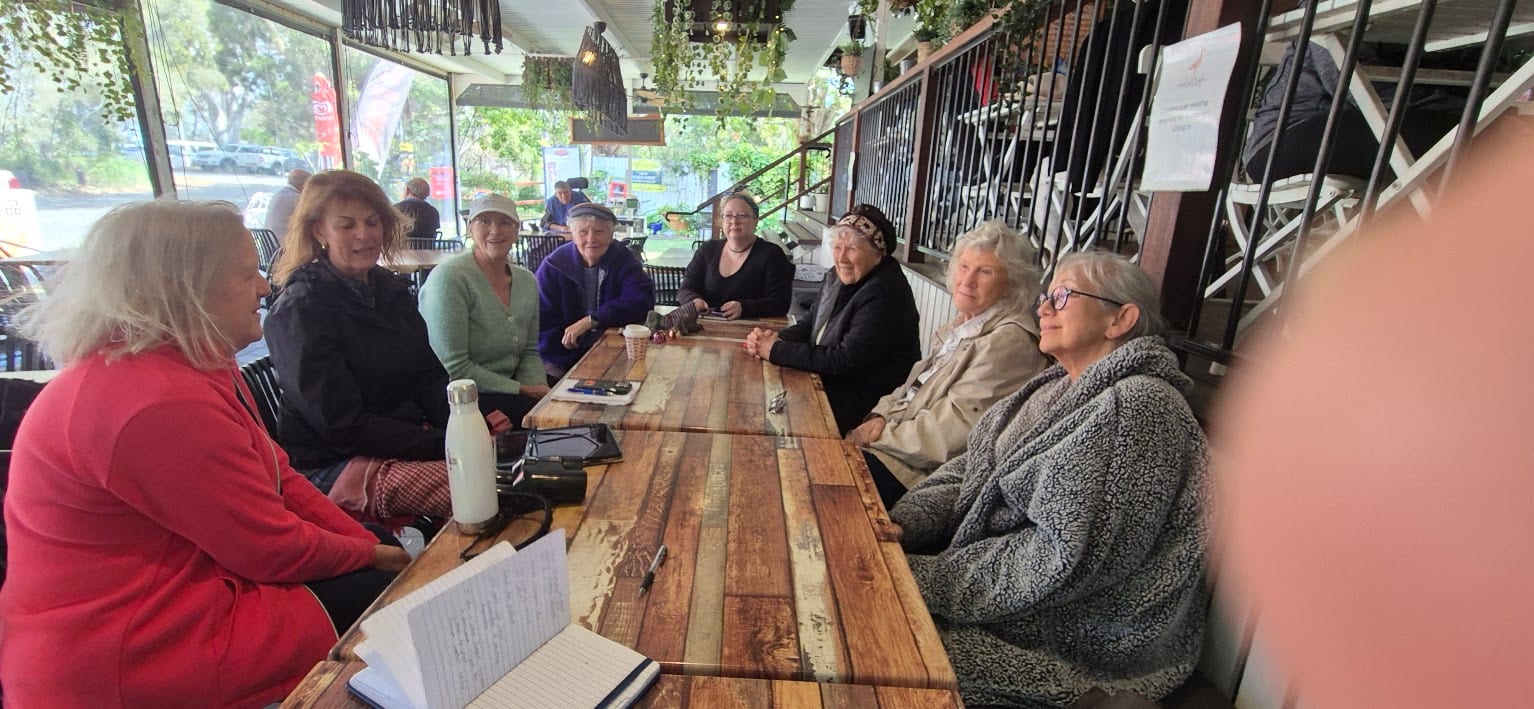
Sheena Gillman, Convenor of BirdLife Southern Queensland, and Division 1 Councillor Wendy Boglary joined residents to discuss what happened, what happens next, and whether the needs of the birds, ferry passengers and council can be managed together.
There was genuine appreciation that Wendy came to Coochie and listened. There was also unmistakable frustration about the wider lack of communication and transparency from Redland City Council. The original problem has not disappearedCouncil has previously said the bird-exclusion measures were installed because of concerns about droppings, public safety, cleaning costs and the deterioration of jetty infrastructure.
Residents did not dismiss the need for a safe and clean ferry terminal. The concern was whether the risk was properly assessed, whether exclusion netting was a proportionate response and whether less harmful alternatives were adequately explored.
Questions raised included:
Council correspondence referred to documented maintenance and safety concerns, including an estimated reduction in flooring life from approximately ten years to seven. Those around the table wanted to see the information behind those claims, not simply be told that documentation exists.
That small word, “documented”, may yet prove to be one of the most important parts of this story.
Concern about how the work was carried outResidents again raised concerns about the installation itself. One witness described seeing plastic fragments from the work being blown into the water by the contractors (now known as Blast Pest Management), following installation. (I had written about the outcome of an investigation of this company by DETSI. Vandals blamed-again! Read it here.)
Questions were also raised about whether the netting mesh was suitable for small birds and whether the contractor had followed an appropriate species management plan.
The meeting heard that nests without eggs or birds may have been removed before the netting was installed and during the subsequent removal of the netting. However, Sheena explained that an apparently empty nest does not necessarily mean it is abandoned.
Welcome Swallows invest considerable energy in building their mud nests, often before eggs are laid, so removing a newly constructed nest may still interrupt breeding.
The swallows were not newcomers to the jetty. Residents said they had used the structure for many years, particularly the protected lower section, where they could shelter from wind and weather.
Cleaning remains the practical issueWith the netting gone, the central question is now very simple: how will the jetty be cleaned?
There was confusion around the current cleaning contract, how frequently cleaning occurs, whether the same arrangements cover both the Coochiemudlo and Victoria Point sides, and whether jetty cleaning was properly included when the contract was awarded.
Wendy said she would seek further information where she could and reassured the meeting that, for now, it was “business as usual”: the birds could remain and the current cleaning would continue.
Sheena suggested that monitoring could help establish the facts. Photographs or time-lapse footage could record how many birds roost beneath the jetty, while morning photographs could show the actual level and location of droppings.
That would give everyone something more useful than assumptions.
Sheena also offered to investigate bird-friendly options that have been tried elsewhere, including small ledges or purpose-designed roosting supports. Any solution would need proper research, but the goal would be coexistence rather than simply moving the birds somewhere else, or another backflip from council.
Human behaviour is part of the pictureSeveral people pointed out that not all mess around the jetty comes from birds.
Fishing waste, bait bags, cans and other rubbish were mentioned, including bags of smelly fishing waste reportedly left on the jetty from humans.
This raised a broader question: are the birds being treated as the primary problem while the impact of people receives less attention? Education, better waste disposal opportunities, signage, appropriate enforcement and a reliable cleaning schedule may achieve more than wildlife deterrents ever could.
A broader frustration with council communicationAlthough the meeting was called because of the swallows, it quickly revealed a much wider concern: residents often struggle to find out what council has decided, why it made that decision, who holds a contract or which department is responsible.
Council meetings and reports may technically be public, but few residents can spend hours watching meetings or searching through documents to locate one relevant detail. Often there are in-house documents that require an RTI to obtain, which can be costly and time consuming.
Those present wanted consultation before decisions affecting the island are implemented, rather than chasing explanations after the money has been spent and the work has already been done.
There was a sense that decisions can be made within separate council departments, with engineering, environmental, operational and community consequences considered in isolation. The netting episode demonstrated what can happen when those perspectives do not meet early enough.
Other concerns fell into several clear themesThe wider issues raised around the table included:
I will follow up on what I can through Coochie Community Online, particularly where information can be confirmed and made accessible to residents.
But one person or one publication cannot pursue every issue.
The discussion suggested Coochie Progress as one possible avenue for people who want to work collectively on wildlife, heritage, erosion, infrastructure or other island concerns. That may suit some residents, and their involvement would undoubtedly be valuable.
It is not, however, the only way to make a difference Individual community members have every right to ask questions, request documents, contact councillors, approach relevant government departments and investigate whether proper processes and statutory obligations have been met.
Sometimes an individual voice can go further than an organisation’s agreed position. Community organisations must balance different opinions and preserve working relationships, which can naturally limit how firmly or how far they are prepared to challenge a decision.
There is value in collective advocacy, but there is also real power in people taking responsibility for the issues that matter to them and pursuing the avenues available to them.
A positive outcome, with a lesson attachedThe meeting ended on a constructive note. The swallows are returning. The exclusion netting is down. Council is not currently proposing further action against the birds, and Wendy’s willingness to come to the island and hear directly from residents was sincerely appreciated.
But the community response was not only about getting a piece of netting removed. It was about asking council to consider environmental knowledge, local experience and community consultation before the next decision is made.
For now, the birds are back beneath the jetty The real test will be whether the communication between council and residents increases, with transparency at the top of our wish list.
If an island issue matters deeply to you, you may choose to work with an existing community organisation, act independently or do a little of both. The important thing is not where your voice comes from, but that you use it.
|
8 Comments
Join the conversation
Thanks Adaire and anyone else who has had a hand in this. It looks like everything that needed to be talked about was done. We had welcome swallows on our farm when I was a kid. I love to see them now flying along with the ferries, swooping through the jetties and feeding their 'jack-in-the-box' babies. They've always had a special place in my heart. Hopefully they'll be given a chance to get on with their cycle of life despite the past human intervention.
ChristineThey are great to watch, aren't they Christine. They are even more special now we nearly lost them. I'm grateful to everyone who helped. A true community effort.
We have only been on the Island permanently since June this year, bit we have been taken aback at the passion and determination with this situation, and also to have Adaire lead the way. The outcome is brilliant but obviously the foot can't be taken off the pedal just yet, but we would just like to say that seeing this Community in action has certainly made us realise that we made the right move by coming here. So, would just like to Thank all of you in this wonderful community and Thank you to Adaire for taking this on.
KarenwiggywigintonThank you Karen! Your contribution to this cause is truly appreciated, and while I probably did act as a 'voice' for this, there was plenty happening in the background, with people writing to council, and phoning in trapped birds to the RSPCA, as well as taking that physical action of releasing the trapped birds (only to be called vandals by the acting Mayor). I'm glad it's resolved, and the best thing about this for me (apart from the welcome swallows being welcome again) is the connections I've been making in the community of people like yourself. We're glad you are here, and actively involved. Thankyou!
It is thanks to your persistence and dedication to this environmental mismanagement, Adaire, that the Welcome Swallows are no longer threatened. The visit of Councillor Wendy and Sheena was most welcome and appreciated. Hopefully there will be greater consultation and consideration between Council and their constituents.
Rosemary StarrThank you Rosemary, your support is very much appreciated. I also believe that it's quite possibly largely due to factors yet unseen by us, along with public outcry. Agree, council could be more transparent in their decision making processes and communicating with people they are here to serve.
Thank you Adaire, Birdlife Southern Qld, Councillor Wendy Boglary, Residents, and the dear swallows. Consideration for the long term, having a group of local Community Members, monitor document the Swallows movements, nesting, their Safety. Also addressing a safe hygiene method around the Terminal with Council.
Maria SealyThank you for being here, Maria. I'd still like the council to be accountable for it's actions, and show us documentation around a Species Management Plan.