
🍇 Midyim Berry |
Uncover the antioxidant-packed superfood hidden in the Australian bush 🌿 #MidyimBerry |
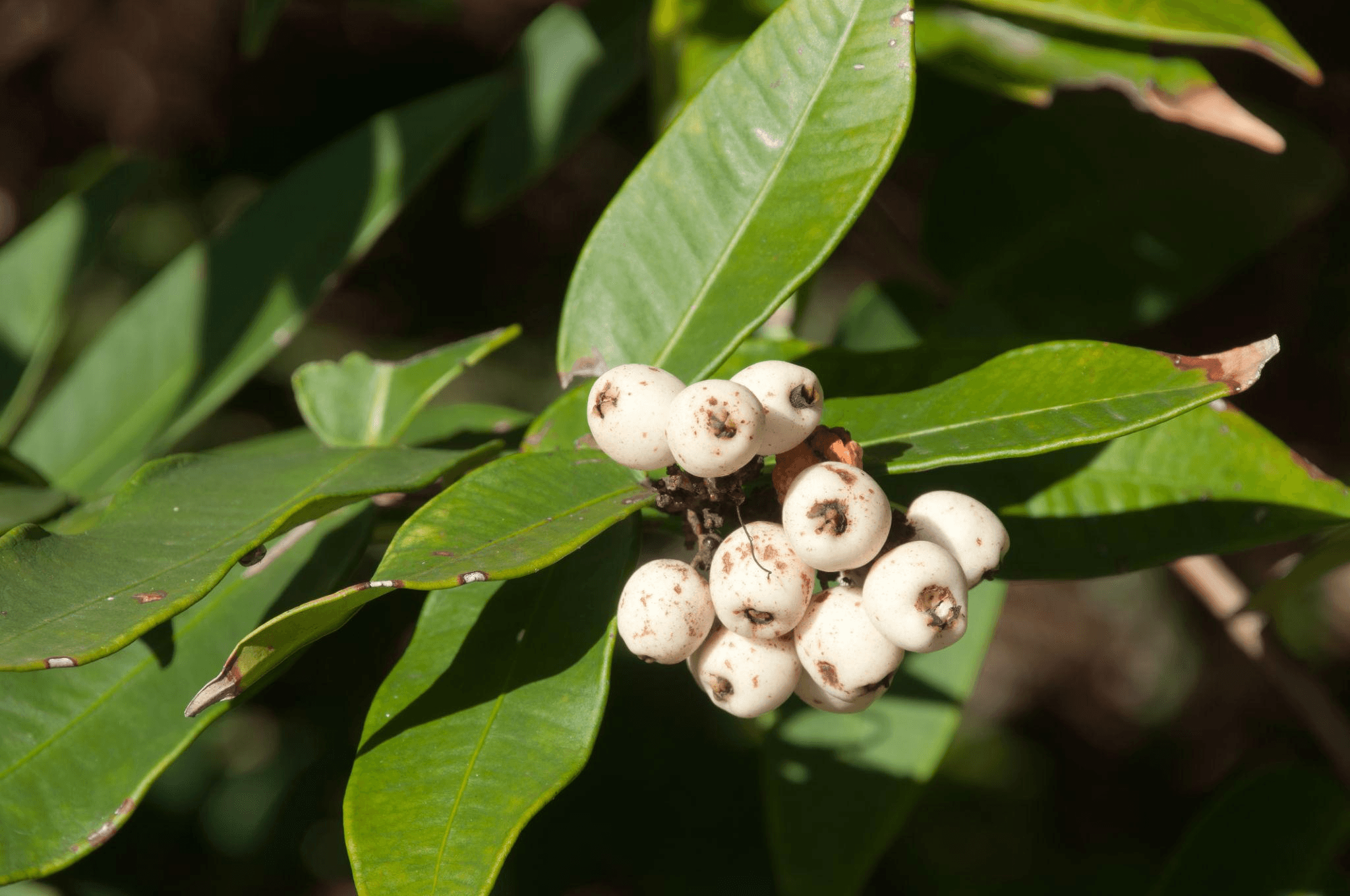
Austromyrtus dulcis
If you’ve walked along Coochie’s sandy tracks and dunes and thought, “That’s a nice little shrub,” you may have walked straight past dessert.
The Midyim Berry, also known as Midgen Berry, is one of those unassuming coastal plants that doesn’t shout for attention. It stays low, spreads gently, tolerates sand, salt and wind, and then quietly produces small white berries that taste like sweet berries with a soft hint of ginger.
Yes. Ginger. In a berry. Nature showing off again.
What is it?
Austromyrtus dulcis is native to coastal eastern Australia, including South East Queensland. It naturally thrives in sandy soils, dunes and open coastal woodland. In other words, it is perfectly at home in environments like ours.
It’s a small, spreading shrub with glossy green leaves and pretty white flowers. The fruit appears after flowering, ripening to white with tiny purple freckles.
And here’s the kicker. The berries are edible straight off the bush. What does it taste like?
Sweet. Mild. Slightly aromatic.
It’s not a punch-you-in-the-face flavour like a commercial strawberry. It’s softer. More refined. A quiet achiever, if you like.
How was it traditionally used?
Like many bush foods, Midyim berries were eaten fresh by First Nations people along the east coast. They were a seasonal treat, gathered sustainably and enjoyed as part of a diverse native diet. These plants were not “discovered.” They were known, used and respected long before we turned up with lawn mowers.
Why it’s perfect for Coochie
Midyim is:
It stabilises dunes and provides habitat while also giving us edible fruit. That is the kind of overachiever we like.
It’s also increasingly planted in gardens because it’s hardy, attractive and productive without fuss. If you’re trying to create a coastal native garden that gives back, this one earns its spot.
Can you just pick and eat?
A few important notes: • Always be 100 percent certain of identification.
Bush tucker is not a free-for-all buffet. It’s a relationship. Fun Ways to Use Midyim Berries
If you’re lucky enough to grow your own or source them responsibly: • Toss into yoghurt or on top of granola
Or just eat them straight from the bush while pretending you’re on a bush tucker cooking show.
A Little ChallengeNext time you’re wandering Coochie, keep your eyes lower. Look along the sandy edges, dune tracks, open bushland.
Notice the small shrubs. Notice the flowers. Notice the fruit.
The island is not just scenery. It’s a pantry. A living, breathing, seasonal pantry that asks us to slow down and pay attention.
And the Midyim Berry is a very sweet place to start.
What are it's seasons? 🌸 SPRING (September – November)Flowering season begins. ☀️ SUMMER (December – February)Peak fruiting season. 🍂 AUTUMN (March – April)Late fruiting window. ❄️ WINTER (May – August)Rest phase.
🧭 Quick Summary for Your Calendar
Local Note for Coochie
Because we’re coastal and surrounded by water, the growing window can stretch slightly compared to inland areas. A warm, wet summer means better fruit. A dry one means fewer berries.
Nature runs on rain, not dates.
Note: I explored the sandy tracks and bushland myself to find this little gem, with some excellent guidance from locals Viv and Graeme. When it came to shaping the story into something clear and useful for you, I had a bit of assistance from my AI helper. Fieldwork by me. Word-wrangling support on standby. |
0 Comments
Join the conversation
Be the first to comment
Share your thoughts above.