
The Mangroves of Coochie’s Wild Northwest
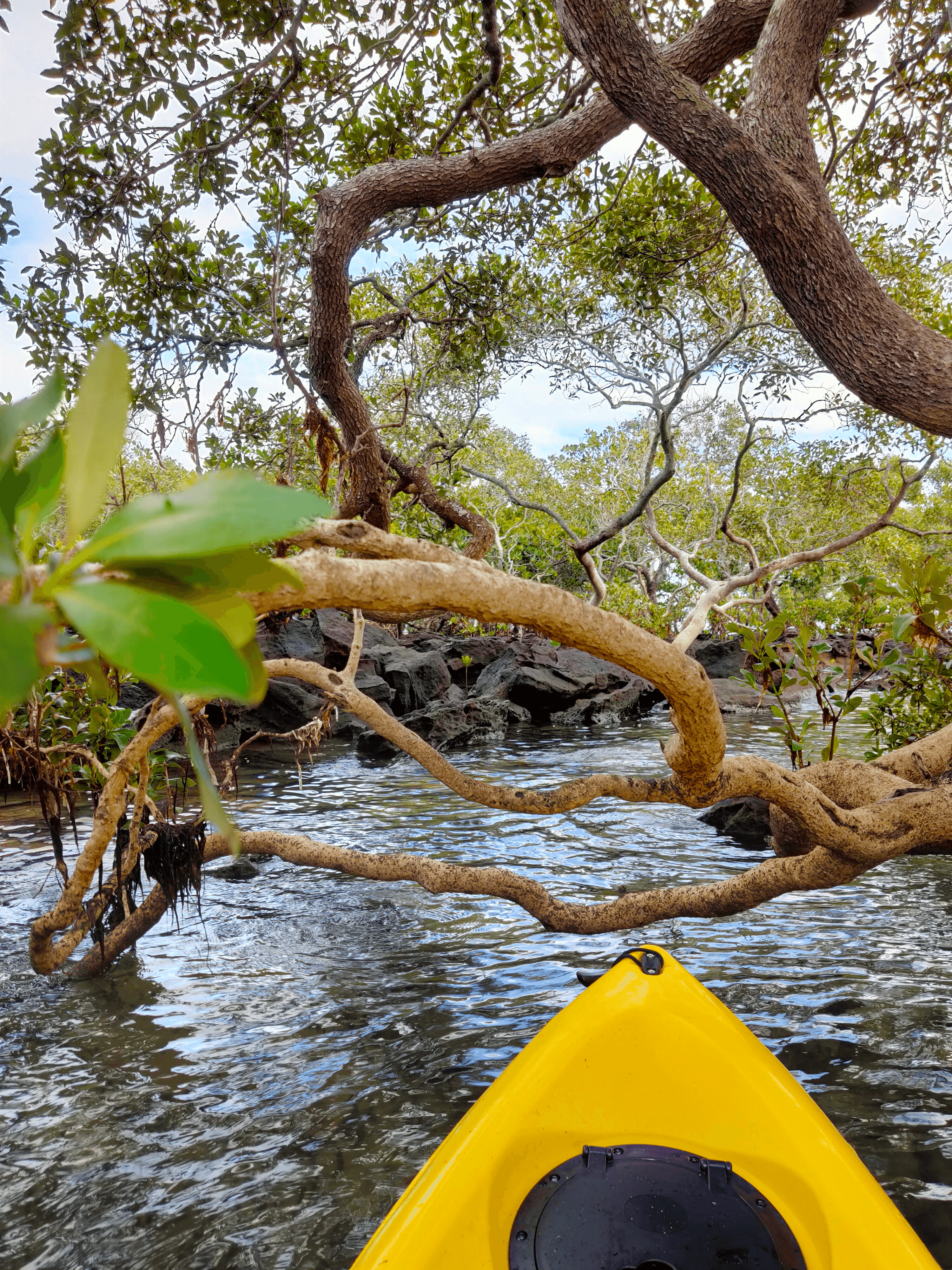
If you’ve never kayaked through the mangroves on the north-western corner of Coochiemudlo Island at high tide, you’re missing one of the island’s best little adventures. When the tide creeps in, the water slips quietly between the trees and suddenly what looked like a muddy forest becomes a winding waterway. That’s when a kayak comes into its own. You glide between the roots, duck under branches, and discover a whole hidden world that most people never see.
One small piece of advice though. Bring mozzie spray. Bring lots of it. Because if you don’t, the local mosquitoes will treat you like an all-you-can-eat buffet and there’s a genuine risk you’ll be carried away by insects roughly the size of small helicopters.
What looks like a tangled mess of roots is actually one of the most productive ecosystems on the planet. Mangroves are nature’s nursery. Those maze-like roots create the perfect hiding place for baby fish, prawns and crabs while they grow big enough to venture out into Moreton Bay. You’ll often see tiny bait fish darting through the water, mud crabs lurking in the shadows, and if you’re lucky, a heron or egret stalking lunch along the edge. Oysters cling to the roots, mangrove snails creep along the trunks, and the mud itself is alive with worms, shellfish and microscopic creatures that keep the whole system ticking over.
Mangroves also do some very serious heavy lifting for the island. Their roots hold the shoreline together and stop the mud and sand from washing away during storms. They trap sediment, filter nutrients and help keep the bay’s water cleaner. In fact, a healthy mangrove forest is one of the best coastal protection systems nature has ever designed. No engineering degree required.
Then there’s the question that always makes people scratch their heads. How on earth do these trees survive in salt water? The answer is that mangroves are absolute masters of adaptation. Some species filter salt out through their roots before the water even enters the plant. Others push excess salt out through their leaves, which you can sometimes see crystallising on the surface. They’ve even developed special breathing roots that stick up out of the mud like snorkels so the tree can get oxygen when the tide comes in.
In other words, these strange looking trees have spent millions of years perfecting the art of living where land and sea collide. And while they might not get the glamour of Norfolk Beach sunsets, the mangroves on Coochie’s north-west corner are quietly doing an extraordinary job every single day.
Just remember.
High tide.
Kayak.
Mozzie spray.
Trust me on that last one.
0 Comments
Join the conversation
Be the first to comment
Share your thoughts above.