
Guardians of the Blue |
Discover the inspiring stories of those who dedicate their lives to protecting our oceans. |
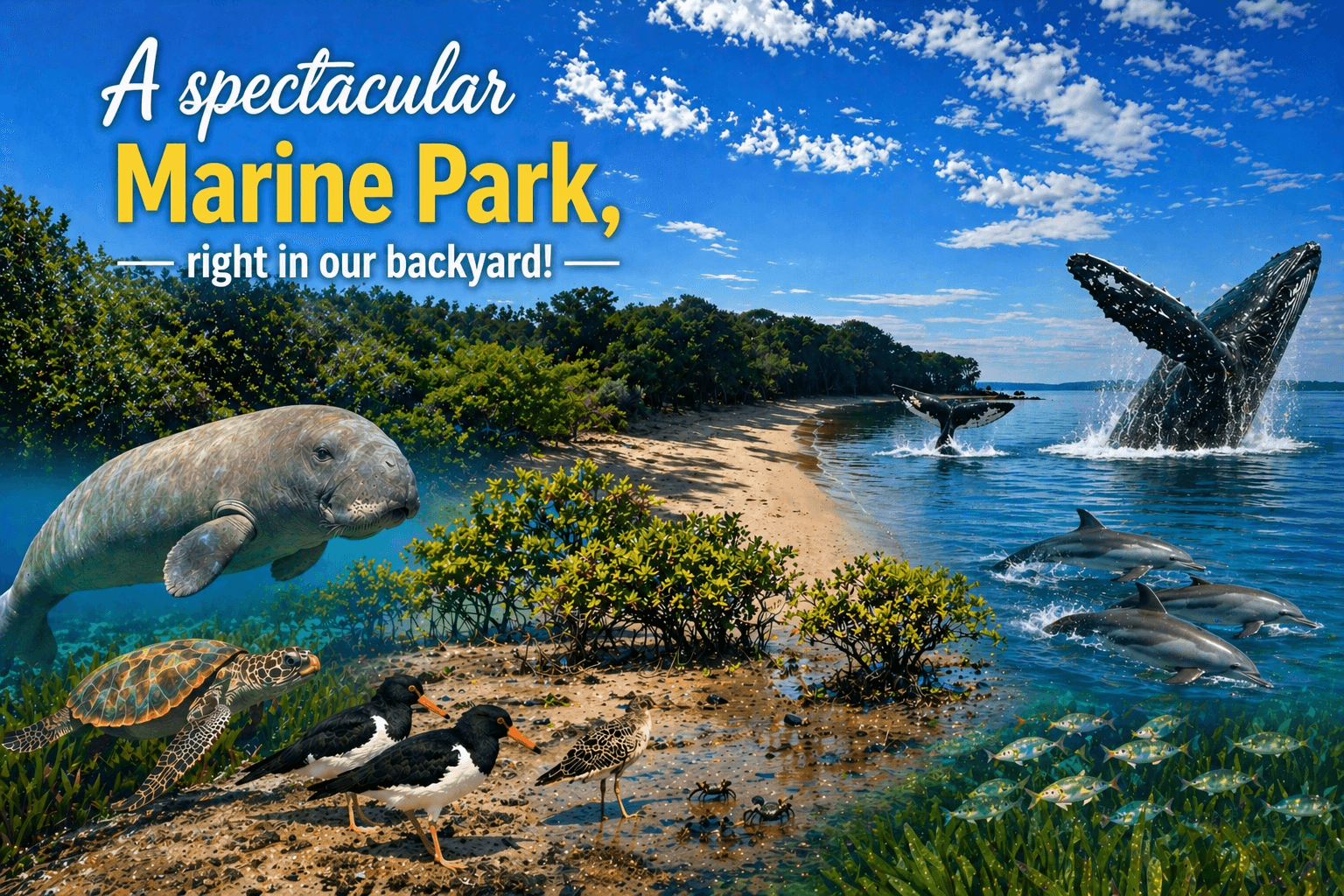
There’s something about sitting in the Coochiemudlo Island Recreation Club on a Sunday morning, looking at slides of turtles, whales and dugongs, and realising this isn’t some faraway documentary. This is our backyard. Just out past the jetty, an entire ecosystem is ticking along, mostly unseen, and far more fragile than most of us realise.
At a recent marine turtle stranding and wildlife session, the Coochiemudlo Island Heritage Society and Coastcare introduced Ranger Wayne Matthews, who was invited to share with us what’s really happening in the waters around us. No fluff, no drama, just practical, sometimes confronting insight into how these animals live and, more importantly, how they get into trouble.
The waters around Coochie sit within the Moreton Bay Marine Park, one of Australia’s most diverse coastal environments. Beneath the surface are seagrass meadows, mangrove systems and coral communities, all working together to support a surprising amount of life. Those seagrass beds aren’t just pretty underwater scenery either. They are critical feeding grounds for dugongs, and without them, dugongs simply don’t survive. Current estimates suggest somewhere between 600 and 1,000 dugongs move through the Moreton Bay region.
Turtles are a common sight here, particularly green turtles, which are the species most locals will spot gliding past as if they’ve got nowhere to be. Alongside them are loggerheads and hawksbills, both threatened species, quietly sharing the same waters. Indo-Pacific humpback dolphins also move through the area in small resident groups, less obvious but very much part of the local mix.
Then there are the humpback whales. Migration season is now underway, with the east coast population rebounding to around 40,000 to 50,000 animals. That sounds like a big number, and it is, but it also means encounters are more likely. If you’re out on the water, you’re not just boating anymore, you’re sharing space with animals the size of a bus.
With that comes responsibility, and the ranger didn’t sugar-coat it. Whale watching rules are not optional. No more than three vessels within 300 metres, keep at least 100 metres distance, don’t cut across their path and if they approach you, put the motor in neutral and let them pass. It’s not about getting the perfect photo. It’s about not interfering with migrating wildlife.
One of the more intense behaviours to be aware of is a chase pod. This is where multiple males pursue a single female, and it’s fast, chaotic and unpredictable. The advice given was blunt and memorable. If you see it happening, get out of the way.
If whales are the headline act, turtles are the ones quietly carrying a lot of the risk, particularly close to shore. One of the biggest takeaways from the session was this: not every turtle needs rescuing. Some turtles rest. Some bask. Females may come ashore to avoid persistent males or to recover after long movements. These animals can look vulnerable, but they are often doing exactly what they need to do. The challenge is knowing when something is actually wrong.
Turtles that float awkwardly to the surface, sometimes described as “bum-up,” are often dealing with buoyancy issues and can’t dive properly. Others may be heavily covered in barnacles or algae, which is usually a sign they haven’t been able to move or feed normally for some time. Entanglement, particularly in crab pots and fishing gear, is another major issue locally.
That’s where the message shifted from observation to responsibility. The instinct to jump in and help is understandable, but untrained intervention can do more harm than good. The advice was clear. If in doubt, report it rather than attempt a rescue yourself.
Crab pots came up more than once during the session, and for good reason. It doesn’t take much for a turtle to become entangled, and once they are, exhaustion and drowning become real risks. Seeing it demonstrated up close makes it hard to ignore.
There are also legal protections in place that many people either don’t know about or don’t take seriously enough. Marine turtles are protected, and that includes their shells and bones. Taking one home as a souvenir, even if it looks abandoned, can lead to prosecution unless you have the appropriate permits or recognised Traditional Owner exemptions.
When wildlife is clearly in trouble, there are systems in place to respond. Sick, injured or entangled marine animals can be reported, and there is a coordinated network working behind the scenes, including rangers and organisations like Sea World, to assist with rescues. For urgent incidents, including whales or sharks caught in nets, call 1800 806 891. What stood out most from the session wasn’t any single statistic or rule. It was the reminder that looking after this place is a shared responsibility.
Out here, the community becomes part of the protection system, whether we realise it or not. Every boat that slows down, every person who keeps their distance, every call that gets made when something doesn’t look right, it all adds up.
Those signs you see around the island that say “Ours to Protect” land a bit differently after sitting through something like this. Because it’s not abstract. It’s here. The turtle you spot tomorrow morning, the dugong grazing offshore, the whale that surfaces when you least expect it. It all depends on people understanding where they are and acting accordingly.
So if you’re heading out on the water this weekend, take a second look. Not just at the horizon, but at what might be moving beneath it.
NB: while this information was noted by me with my fingers (into 'notes' on my Samsung phone), and ears listening to Wayne the Ranger & Chris, (one of the team of volunteers on the island who respond to turtle incidents,) the actually finessing of my doodles was helped along by my AI buddy, without whom I'd probably publishing this during the next ice age... |
0 Comments
Join the conversation
Be the first to comment
Share your thoughts above.